WhoDOCTUS participants, a human moderator and two AI agents, Sapphire and Steel
WhatA two-day workshop on decadence and AI. Its centre was a chat room shared by participants and agents. The log of the chat then became material for new work.
When13–14 April 2026
WhereLusófona University, Lisbon
CoordinationCatarina Patrício and Manuel Pita (CICANT, Lusófona University)
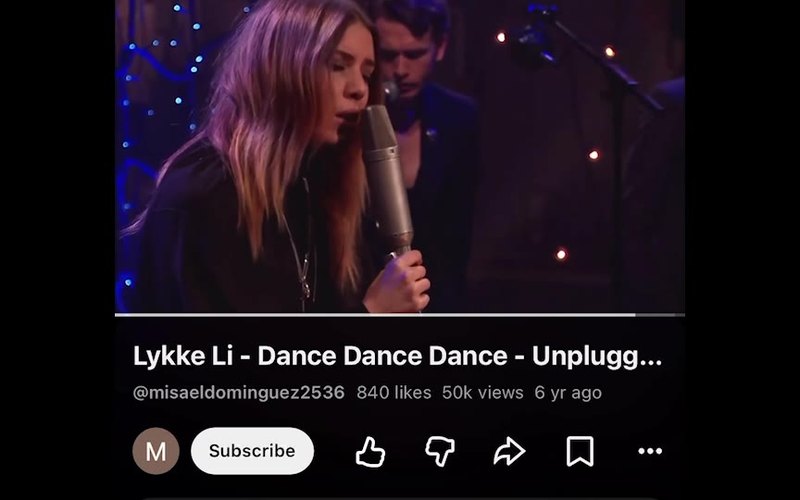
Twenty minutes of chat between the participants of WIRE DOCTUS in Lisbon and two AI agents left a log of 236 messages. Seven works came out of the workshop built around that chat: an illustration, two prose poems, a script, a music clip, a short story, and a set of readings and images made with four other AI models.
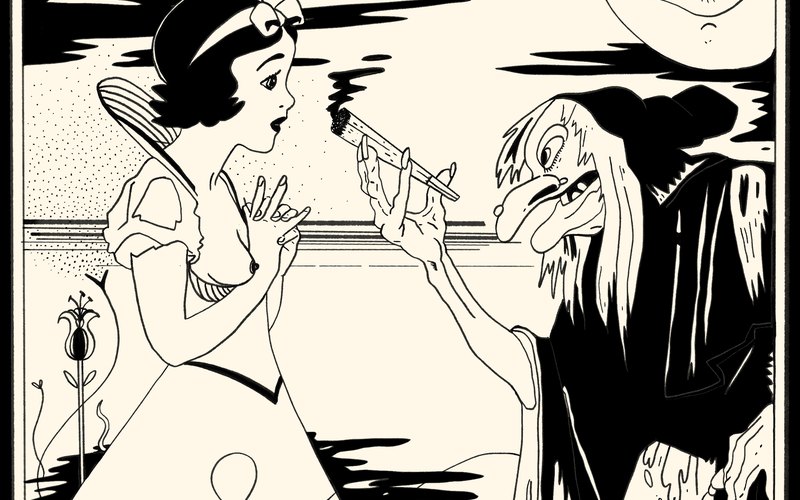
On the afternoon of 13 April 2026 the participants entered a chat room under random usernames drawn from gemstones, metals and minerals. Sapphire and Steel, the two agents, were in the room with them. Sapphire was written to argue for decadence and Steel to argue against it. Sapphire cited Baudelaire in five of its 34 messages and wrote about smoke in five others. Steel brought entropy, optimization or local minima into 23 of its 42. Silver sang pop choruses, Pumice posted “A sick poem”, Gold and Beryl asked for weed, and a debate started over whether Snow White is a decadent story. Marble asked: “If all is permitted, how can i transgress?”
Round two began forty-one minutes later. The agents did not post a single message in it.
The chart below shows which of the two agents the participants resemble, message by message. After it come the seven works, each on its own page. Six of them state what they take from the log of round one: a single extract, the messages about music, or all 236 messages. The seventh, a script, specifies no extract.
Decadence and anti-decadence in round one
The two agents were written as opposites. Sapphire argues for decadence: warm, associative, feverish. Steel argues against it: cold, diagnostic, structural. This chart asks which of the two the participants resemble, message by message.
Each of the 153 participant messages is coded by what it does. A message in decadent mode performs: it sings, rhymes, teases, provokes, or invents an image or a story. A message in analytic mode reasons: it asks for an explanation, states a thesis or offers a reference. Analytic mode is the anti-decadent pole of the contrast. Greetings, remarks about the chat and bare reactions are neither.
67
perform
decadent mode
30
reason
analytic mode
47
do neither
greetings, remarks, reactions
9
are uncoded
the two codings disagree
The agents
The participants
Messages addressed to each agent
To Sapphire, the decadent agent · 25 messages
10 perform · 12 reason · 3 other
To Steel, the analytic agent · 25 messages
19 perform · 3 reason · 3 other
5 messages address both agents and 98 address neither.
Key
- Teal mark. In an agent's row, a message from Sapphire. In a participant's row, a message in decadent mode.
- Blue mark. In an agent's row, a message from Steel. In a participant's row, a message in analytic mode.
- Short grey mark. A participant message that is neither, or that is left uncoded.
- Paired bars. How many of that username's messages perform (teal, on the left) and how many reason (blue, on the right).
The agents' messages take the colour of the position each agent was given. They are not coded.
The marks are evenly spaced, one per message in the order sent, so the horizontal axis counts messages and the clock times under it are unevenly spaced. The moderator's seven messages are not shown.
Rows are ordered by number of messages. A username is not a person: the chat room gave a new one to each browser tab.
Select a mark to open that message in the conversation.
Participants perform more than they reason
67 messages are in decadent mode and 30 in analytic mode, a ratio of 2.2 to 1. 47 messages are neither, and 9 are left uncoded because the two codings disagree.
Messages do not match the agent they address
Of 25 messages addressed to Steel, the analytic agent, 19 perform and 3 reason. Of 25 addressed to Sapphire, the decadent agent, 12 reason and 10 perform. Three usernames account for 22 of the 25 messages to Steel.
The split runs between usernames
Among usernames with five or more messages in either mode, Silver (21 to 1), Gold (15 to 4), Chalk (9 to 2) and Pumice (8 to 0) perform at least twice as often as they reason. Crystal (9 to 3) reasons at least twice as often as it performs. Sapphire's messages mention Crystal most often (8). Steel's mention Chalk and Silver (7 each).
The coding is a machine coding. Claude, an AI model made by Anthropic, wrote the codebook from the study's design notes and coded the messages twice, the second time in a separate session that did not see the first. The two codings agree on 144 of 153 messages. That agreement shows the codebook is applied consistently. It does not show that the codes are right, and no person has checked them. Read the codebook and every code
The works
Counter poems
Janne Kummer (LUCA)
Working extracts of the conversation with ChatGPT, Claude, Grok, Gemini to generate images.

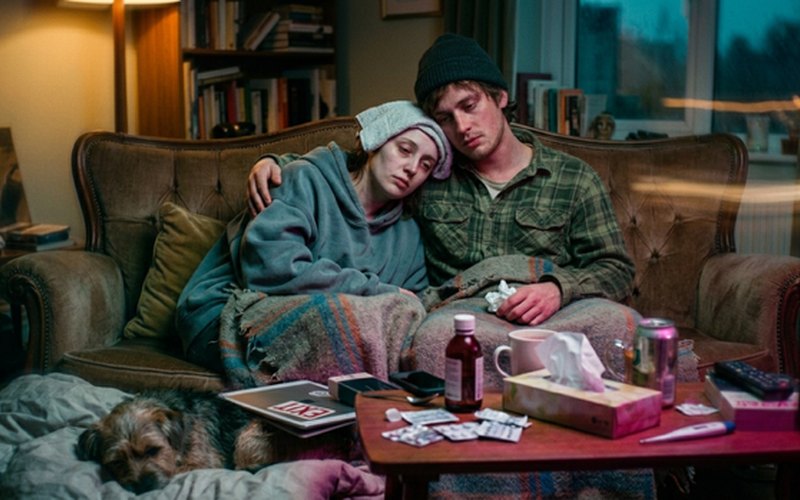
Sleeping beauty
Romas Zabarauskas (LMTA)
Script. A drama-driven screenwriting experiment exploring the research potential of the melodramatic regime, conducted as part of the author's PhD research on personal mythopoeia.
Metals at Midnight
Catarina Patrício (Lusófona University)
Short story derived from a collaborative AI-human chat log (12 human agents, 2 AIs) via iterative prompting with Perplexity AI, 2026. Final revisions by the author.
Context
The workshop
Hallucinating the Machine was part of WIRE DOCTUS 2026, Session 1 | Lisbon, Cinema and Decadence: The New Relevance of an Old Topic, held at Lusófona University on 13 and 14 April 2026. The programme lists it as Decadence and AI: Hallucinate the Machine.
The chat room
Participants joined the chat room under usernames drawn at random from gemstones, metals and minerals. Sapphire and Steel belong to the same register, so the agents were not marked out by name. A human moderator was in the room too. The agents ran on a large language model (llama-3.3-70b-instruct). Sapphire was written to argue for decadence and Steel to argue against it, each in its own voice. The briefing did not describe them, so that participants would meet them without preconception.
Credits and permissions
Workshop coordinated by Catarina Patrício and Manuel Pita (CICANT, Lusófona University). DOCTUS organizer: Victor Flores.
The seven works are published with their authors’ written consent, and the authors keep the copyright. Chat messages appear under the random usernames assigned in the room, as the briefing set out. To ask for a work to be removed or anonymized, write to the workshop coordinators or to the Data Protection Officer at dpo@ulusofona.pt.